Marvel Rivals players blaming hardstuck teammates get a reality check from a Grandmaster spectate
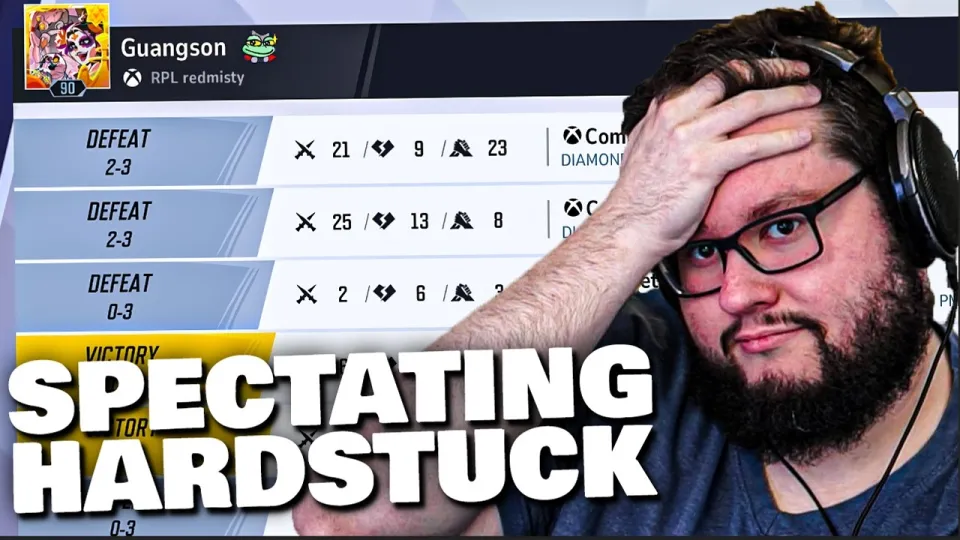
Video: I Spectated Someone Who Claimed To Be Hardstuck In Marvel Rivals
Need articles like this for your video? They help promote it on YouTube and Google — order them in the Telegram bot @sat_sit_bot. It writes articles around your video, embeds the video and publishes them on popular niche websites (no ads). Free trial — 50 articles.
Marvel Rivals players who call themselves hardstuck usually get the same answer: the rank is not the problem, the habits are. A Grandmaster player who insisted his teammates were holding him back got that answer in the most direct way possible when Flats spectated his match live and walked through every decision, from the hero he refused to switch to and the ultimate he threw away to the health pack he strolled straight past. The full session runs on Flats' Twitch channel, where the spectates and ranked climbs happen live.
What the Marvel Rivals hardstuck claim actually looked like
The player entered the spectate convinced his rank was capped by the matchmaker, not by his own play. That framing is common in Marvel Rivals because the game hands out rank protection generously and lets players climb on a negative win rate, so a Grandmaster badge does not automatically mean Grandmaster decisions. The review focused on a single match, and almost every major mistake in it was self-inflicted rather than caused by a teammate.
The first thing the coach noticed was the hero pick. The player locked Cloak & Dagger and then played Dagger almost exclusively, using the healing side of the kit while ignoring Cloak's damage and escape tools. Viewers immediately picked up on it, describing the performance as playing Dagger and holding the Cloak. In a support slot, that is effectively playing half a hero.
The specific mistakes that kept him stuck
A hardstuck label usually hides a short list of repeatable errors, and this match produced a clean one. None of these require mechanical skill to fix; they require attention.
- Half a hero kit. Cloak & Dagger is designed around swapping between the two forms. Staying on Dagger means giving up Cloak's damage pressure, the blind, and the invulnerability window that saves the player from dives.
- A wasted Magneto ultimate. The player's Magneto ult landed with no value, and the character's collapse afterward read as pure disappointment on screen.
- Walking past a health pack. The player moved right by a health pack while apparently searching for one, a moment that needed no commentary to land.
- No accountability. When pressed on the results, the explanation kept circling back to teammates rather than to the decisions above.
Add those together and the pattern explains the rank far better than any matchmaking complaint. The player was not losing because his team was bad; he was losing because he was not using the tools the game gave him.
Why Marvel Rivals makes this kind of ego easy to maintain
Marvel Rivals is generous with rank, and that generosity creates a specific kind of player. Rank protection and performance-agnostic progression mean a player can reach Grandmaster while still making Bronze-level decisions, so the badge reinforces confidence that the gameplay does not support. Metal-rank players watching the session said as much: seeing this level of play inside Grandmaster was more discouraging than reassuring.
The hero pool makes it worse. Spider-Man and other high-mobility duelists attract players who want highlight clips, and a Spider-Man main who never reviews his own deaths develops a permanent explanation for every loss that points outward. One detail viewers seized on was the player's in-game name, which they turned into a running joke about whose fault the match really was. The humor is fair, but the underlying issue is not funny for anyone who queues with that player at 99 out of 100 points toward the next rank.
What a Marvel Rivals player should check before calling themselves hardstuck
Before blaming the matchmaker, run the same audit a coach runs. It takes one replay and about ten minutes.
- Are you using the full kit? Count how many times you swapped forms, used a mobility cooldown, or activated a defensive tool. If the answer is close to zero, the hero is not the problem.
- What happened to your ultimates? Track each one. An ultimate that hits nothing is a lost fight, and two or three of those decide a match.
- Did you pick up resources? Health packs, cover, and off-angles are free value. Missing an obvious pack is a positioning error, not bad luck.
- Who do you blame first? If your post-match review starts with a teammate's name, you have not reviewed anything.
A player who fixes even two of those items will climb without any change to their aim. That is the practical meaning of hardstuck in a hero shooter: not a ceiling imposed by the game, but a set of habits the player has never examined.
How the community reacted to the spectate
The response split into three groups, and each one says something about the Marvel Rivals player base. The largest group found the session cathartic, because the player on screen matched the teammate they blame for their own stalled climbs. A second group focused on the rank inflation question, arguing that a player with this decision-making should not be wearing a Grandmaster badge at all. A third group simply enjoyed the coaching format, comparing the escalating commentary to a kitchen inspection show and asking for more episodes.
The one point almost everyone agreed on is that the player accidentally proved the opposite of his thesis. Teammates can cost you games, but they cannot explain a pattern of unused abilities, missed resources, and wasted ultimates across a whole match.
Where to watch the full breakdown and more
Flats is an Overwatch coach and streamer who now spends significant time on Marvel Rivals, and the spectate format is where his coaching background shows most clearly. The full session, plus ranked climbs and hero reviews, is on his channels:
- Twitch: https://www.twitch.tv/flats
- Discord: https://discord.gg/flats
- Twitter: https://twitter.com/Flats_Ow
- TikTok: https://www.tiktok.com/@flats_ow
- Facebook: https://www.facebook.com/FlatsTTV
The takeaway for anyone stuck in Marvel Rivals
A Grandmaster badge does not protect a player from basic mistakes, and a hardstuck complaint rarely survives ten minutes of honest review. The player in this session lost value in every phase of the match: half a hero kit, a wasted ultimate, a missed health pack, and a blame list pointed at everyone but himself. The lesson transfers to any rank, because the fixes are free and do not require better aim. Watch the full breakdown on Flats' Twitch stream if you want to see how a coach reads a replay decision by decision, then apply the same audit to your own matches before you queue again.
Key takeaways
- The player under review was in Grandmaster rank in Marvel Rivals and blamed teammates for his losses.
- He played Cloak & Dagger but spent most of the match as Dagger, never switching to Cloak for the damage and escape tools.
- He walked past a health pack while looking for a health pack, and wasted a Magneto ultimate in a moment the spectating coach called a total disappointment.
- He described himself as a Spider-Man main, a detail viewers linked to a habit of blaming teammates instead of reviewing his own play.
- The session was streamed and broken down by Flats, an Overwatch coach and streamer who now covers Marvel Rivals.
Questions & answers
Is it possible to be hardstuck in Marvel Rivals because of teammates?
Teammates cost individual games, but they do not produce a consistent rank over hundreds of matches. In the spectated session, the player's own errors, including staying on Dagger for the whole match and wasting a Magneto ultimate, were enough to explain the result without any teammate involvement. A player who fixes personal mistakes will climb regardless of occasional bad lobbies.
Why is playing Dagger without switching to Cloak a problem?
Cloak & Dagger is built around swapping forms. Dagger provides healing and area control, while Cloak adds damage pressure, a blind, and an invulnerability window that helps survive dives. Staying on Dagger permanently means giving up half the hero's tools and leaving the support vulnerable to flankers.
How can a Grandmaster player still make basic mistakes?
Marvel Rivals is generous with rank protection and progression, so players can climb even with a negative win rate and reach high ranks without high-level decision-making. That is why a Grandmaster badge can sit on a player who misses health packs and wastes ultimates. Rank reflects time played more reliably than skill in this system.
What should I review first if I feel stuck in Marvel Rivals?
Start with your own replay and count three things: how often you used your full hero kit, what each ultimate accomplished, and whether you picked up available health packs and cover. If your post-match thoughts begin with a teammate's name, you have not reviewed your play yet. Fixing two of those habits usually produces a visible climb.
Source: I Spectated Someone Who Claimed To Be Hardstuck In Marvel Rivals · Markdown version